
Why Some Autistic Children Don’t Feel the Need to Go to the Toilet


Article by Monica Reeves (B.Nurs, GradCert Autism) - Autism & Continence Specialist, Founder of Brightlives
Why doesn’t my child feel when they need to go to the toilet?
For many families, this is one of the most confusing parts of toileting. Their child might be progressing well in other areas, but still has accidents or doesn’t seem to recognise the need to go.
In my clinical work as a Continence Nurse Consultant specialising in autism, this is something I see quite often. And in many cases, it comes down to how the body processes internal signals.
It’s Not Always About Awareness or Behaviour
When a child doesn’t respond to the urge to go to the toilet, it’s often assumed they are:
• ignoring the feeling
• too distracted
• not motivated
• or not ready
In many cases, the issue isn’t about behaviour at all. It’s about whether the child is actually receiving the signal clearly and early enough.
How the Body Signals the Need to Go

For most people, the body sends a gradual signal when the bladder is filling.
There is usually time to notice the feeling, pause what you’re doing, and go to the toilet.
For some autistic children, this process can be very different.
The signal may:
• be very weak
• come very late
• feel unclear or confusing
• or not be recognised at all
This means the child may not realise they need the toilet until the last moment — or sometimes not at all.
What This Can Look Like
In real life, this often presents as:
• sudden accidents with no warning
• rushing to the toilet but not making it in time
• continuing to play despite needing to go
• appearing unaware that they have wet themselves
From the outside, it can sometimes look like the child isn’t paying attention.
But in many cases, they simply didn’t feel the signal early enough to act on it.
The Role of Interoception
This is where interoception plays an important role. Interoception is the body’s ability to recognise internal signals, including the need to go to the toilet. Many autistic children experience reduced interoception, which can make these signals harder to notice or interpret.
This isn’t something a child can control. It’s a difference in how their bodies communicate.
Other Factors That Can Contribute
There are also other factors that can impact whether a child recognises the need to go to the toilet.
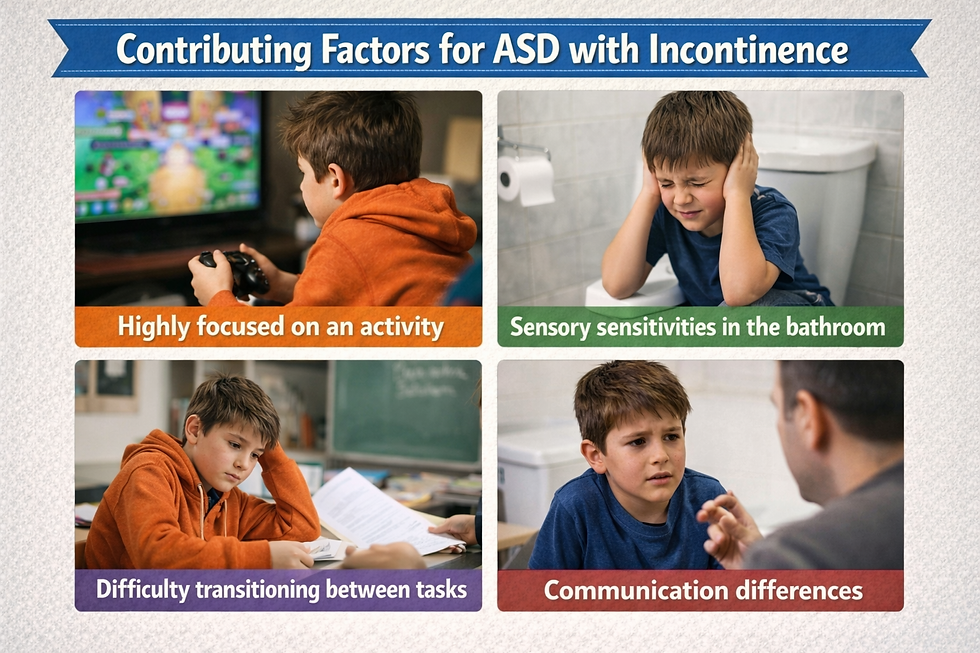
These can include:
• being highly focused on an activity
• sensory sensitivities in the bathroom
• difficulty transitioning between tasks
• communication differences
Often, it is a combination of these factors rather than just one.
How We Can Support This

When a child is not recognising the need to go, the approach to toileting needs to shift. Rather than waiting for the child to tell us, we support them with structure.
Some strategies I often recommend include:
• introducing regular toilet routines throughout the day
• supporting transitions before and after activities
• observing patterns in timing
• reducing sensory discomfort in the bathroom
• using visual supports if helpful
Continence products may also be part of this stage to support the child’s dignity while skills are developing. In addition to this a continence assessment can help in understanding what is going wrong for your child.
A Different Way of Understanding Toileting
One of the most important shifts for families is understanding that toileting is not just a learned behaviour. It is also a body-based process. When the body signals are unclear, the child needs support that reflects that. When we approach toileting with this understanding, we can reduce frustration and support more consistent progress.
If you want to get in touch about a Brightlives Continence Assessment please send us a message below:
About the Author
Monica ReevesClinical Nurse ConsultantAutism & Continence Specialist
Bright Lives – Telehealth Across Australia
Monica provides specialised continence assessments, NDIS reports, and practical continence strategies for children and adults with autism and complex support needs.


Comments